
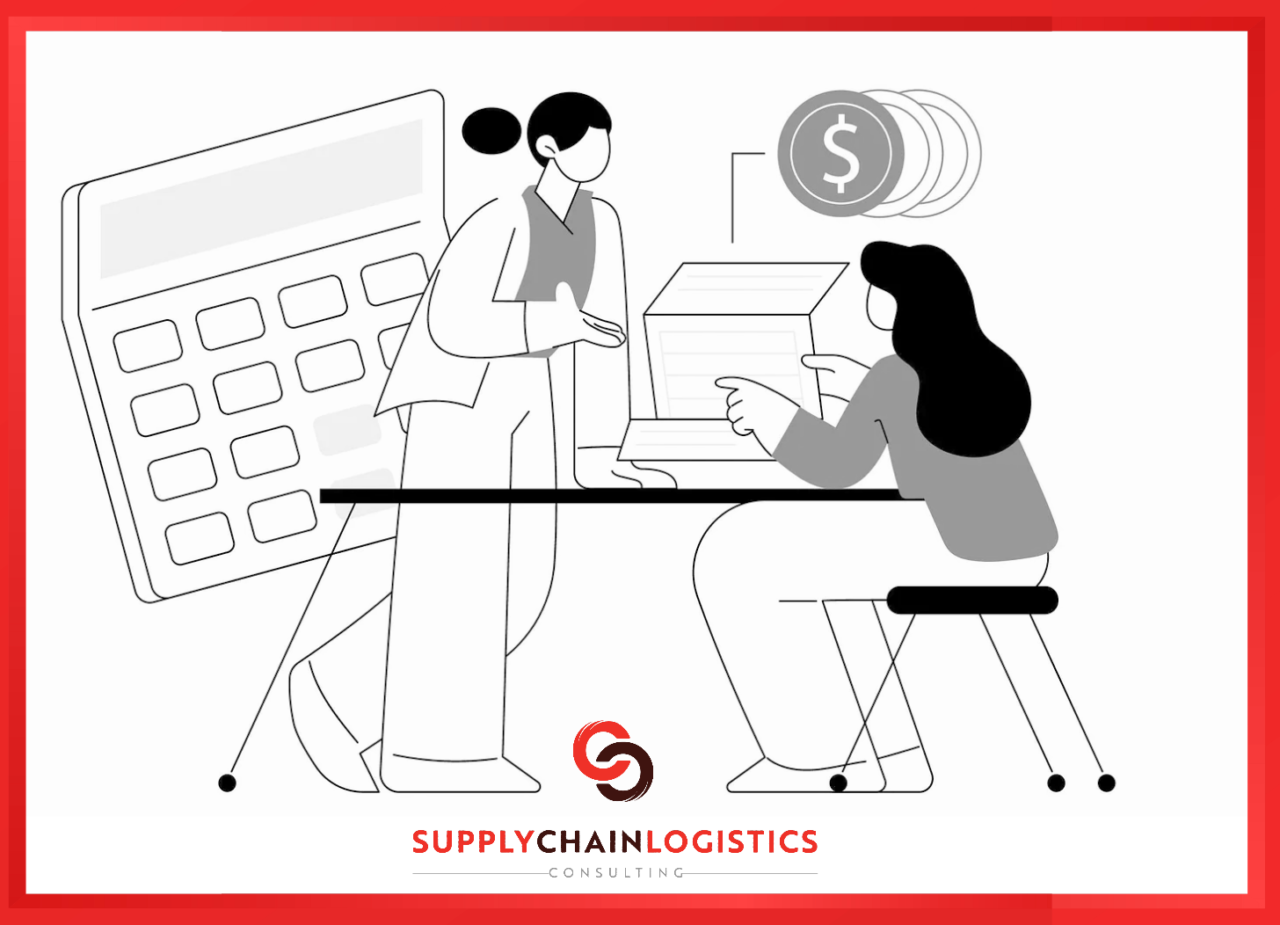
When you engage a strategist and request an entry level performance, you aren’t just wasting time—you’re missing the transformation your business actually needs. Learn from this classic example.
When Your Scope Strangles the Solution: A Cautionary Tale for Procurement
Learn from this classic “penny-wise, pound-foolish” scenario.

In the world of supply chain management, we often hear talk of “visibility.” We want to see the materials in motion, understand the costs, and unravel the bottlenecks – accurately, and in real-time. However, there is a critical type of visibility that logistics software cannot provide, it is from clarity of intentions in procurement.
We recently engaged with a prospective client who appeared to be on the verge of a great change, a transformation of supply chain management operations. They described a sweeping organizational shift — a ground-up evaluation of logistics, material flows, and managerial processes. The goal was noble: greater efficiency, significant cost savings, and a roadmap for the future of their human and digital resources.
As a strategic consultancy, we know this is where the magic happens. This is where systems thinking transforms cluttered warehouses into precise and efficient, throughput masterpeices; where complex supply chain management operating systems morph into streamlined engines with limitless potential for profitability.
Our discussions had stalled… But why? On closer reflection we saw that a “Scope Creep” had happened. Only this time it didn’t creep upwards – by raising the bar and expanding the requirement, costs, and expectations; instead it had collapsed inwards, falling heavily into itself.
The Hidden Cost of Misunderstandings
As the negotiation progressed, the buyer’s vision began to narrow. The grand ambition of “operational excellence” was traded for a singular, obsessive focus on a specific logistical report. They didn’t want a strategy; they wanted a spreadsheet.
Despite our experience in high-stakes supply chain operations, important qualifications were sidelined. The buyer had no set criteria for the final deliverable, yet dismissive of any advice that didn’t involve immediately producing a demonstrative report—a report that, frankly, an intern could generate in seconds using an AI tool or free spreadsheet template.*
The Consultant’s Nightmare:
Being asked for a solution … without a problem-to-solve.
The Procurement Paradox
When a buyer narrows their criteria – too dramatically, they create a “Procurement Paradox.” By focusing on a micro-deliverable (the report) instead of the outcome (the transformation), they lose the perception of what they are buying versus what they said the company needed.
* Is it Software?
If you only want a report, buy a SaaS subscription.
* Is it Talent?
If you only want someone to run the data, hire a temp analyst or a recruitment agency.
* Is it Consulting?
If you actually want to know why the numbers are-what-they-are, and how to change them for the better, you hire a trusted advisor.
By obsessing over a narrow, “low-value” and closed-ended deliverable, the buyer effectively pigeon-holed which solutions were possible from a strategic consultancy – derailing a proposal for a project that could have resulted in millions saved. Instead, they were left looking for a stop-gap measure unrelated to the desired outcome, this was a project that hadn’t been communicated, understood, or even properly budgeted.
The High Cost of Narrow Vision
When procurement processes lack clear, open supplier criteria, everyone loses. The buyer spends months in “negotiation” for a tool they could have downloaded in an afternoon, and the consultant is forced to recommend a recruitment agency instead of a solution.
“When procurement processes lack clear, open supplier criteria, everyone loses.”
S&Co., Supply Chain Logistics Consulting Inc.

The Lesson:
Don’t let a too specific supplier criteria eliminate the very solution you set out to find. Avoid narrowing the scope of a request too much for your actual objective to be met. Be up-front about needs and deliniate any specific methods or deliverables you require.
If you need a master chef, you would not have their time preparing onions without specifying a dish. Focus on the order for your meal and clarify how you will determine their qualifications. If you have to try before you buy, ensure this is something that they also are prepared to offer.
In managerial consulting, a single “report” is similar to the chefs onions. It is only an ingredient to help prepare and arrive at a finished result, perhaps it is possible to achive the same end using a variety of alternatives. This is the strategic component to sourcing a solution rather than an ingredient. To our chef, the finished meal is the materpiece and can be arrived at using the skills, breadth of experience, and unique perception they developed over the years. For a consultancy, the “objective” is the finished meal.
The “Narrow Scope vs. Reality” Checklist
To help you identify if you are falling into this trap, here is a quick comparison of what a buyer asks for versus what they actually need:
The Buyer’s Narrow Request – VS. – The Actual Strategic Need
- “I need a report on last month’s shipping delays.” – VS. – “I need to identify the systemic failures in my carrier network.”
- “Show me a demo of what your data looks like.” – VS. – “Show me how to restructure my team to act on data insights.”
- “Can you provide templates of this one-off analysis for free?” – VS. – “How do we build a sustainable process to prevent these costs?”

If you find yourself obsessing over the format of a report rather than the health of your supply chain, it might be time to step back and ask:Are you buying a tool, or are you buying a transformation?
S&Co., Supply Chain Logistics Consulting Inc.
The Two-Minute Logistics Reporting “Proof”
To illustrate the point, I performed a small experiment after this exchange concluded….
This took exactly 120 seconds.
Using a free AI tool, I generated the exact “demonstrative report” the buyer had become obsessed with. In two minutes, I produced the very thing they were using as a gatekeeper for a six-figure strategic consultation.
Our query also generated our specific request for sample data, the multi-view KPI dashboard, the executive summary of key findings, and and the requested heatmap python code to use on any future report with any new data-set.
Would you like to know more⁉️
Sign up for our monthly newsletter and see tutorials like the prompt series from this scenario 📬
Our AI Query for a Logistics scenario analysis generated….
1. our requested sample data,
2. the multi-view KPI dashboard,
3. the executive summary of key findings, and
4. the requested heatmap python code to use again.
S&Co., Supply Chain Logistics Consulting Inc.


CLICK HERE TO SEE THE EXECUTIVE REPORT (PDF) FOR MULTI-MODAL LOGISTICS – FROM OUR AI-GEN SCENARIO
A red flag for modern procurement…
If your “must-have” deliverable can be produced by a free AI (artificial intelligence) tool, or a junior intern with an Excel template in less-than the time it takes to brew a cup of coffe… then you are not looking for a consultant.
Knowing Your Needs: Software, Talent, or Strategy?
Recognizing that the buyer was effectively “resource-blind”—unsure if they needed a software solution, a new hire, or actual advice—I pivoted. I recommended a recruitment agency and pointed them toward basic software templates.
This wasn’t a dismissal; it was the most honest advise we could provide. If a client is unwilling to value practical experience and is focused on solutions that can be obtained for free with minimal effort, the most professional thing an advisor can do is point them toward the door marked “Hire An Intern.”
It’s a Two-Way Street: With Regards…
A partnership only works if both parties arrive to the table prepared to work together.
There is a pervasive, damaging idea in some procurement circles that a consultant should “prove” their worth by working before a contract is even signed.
In this instance, the buyer expected a masterclass in report generation, designed to their explicit specifications, all provided for having simply asked.
Let’s be clear:
It does not serve any business to dedicate resources towards building products or providing services “on-demand”, for literally nothing in return, from anyone who asks.
Strategic advisors and prospective partners should each be interested in taking steps to develop trust prior to negotiations and an eventual business engagement.
This buyers refusal to review qualifications or to provide transparent, well-prepared supplier criteria up-front, they aren’t “negotiating”—they are refusing to accept the unique perspective and opportunity that a consultant offers.
A transparent Statement of Work (SOW) is the baseline for professional conduct in a basic procurement with even the simplest deliverable; without it, the buyer is not requesting a solution, they are looking for a free lunch.
The High Cost of Narrow Vision
When procurement processes lack clear criteria and focus on “what can I get now” instead of “how do I fix the system,” the business loses. You don’t hire a master strategist to do the work of an ordinary analyst, and you don’t need a ferrari to deliver a pizza.
The Lesson: If you find yourself obsessing over the format of a report rather than the health of your supply chain, you aren’t buying a solution—you’re buying a distraction.
Don’t let a narrow scope exclude the expertise you actually need to survive the transition.
Visit Supply Chain Logistics Cosnulting and subscribe to all our social channels online.

